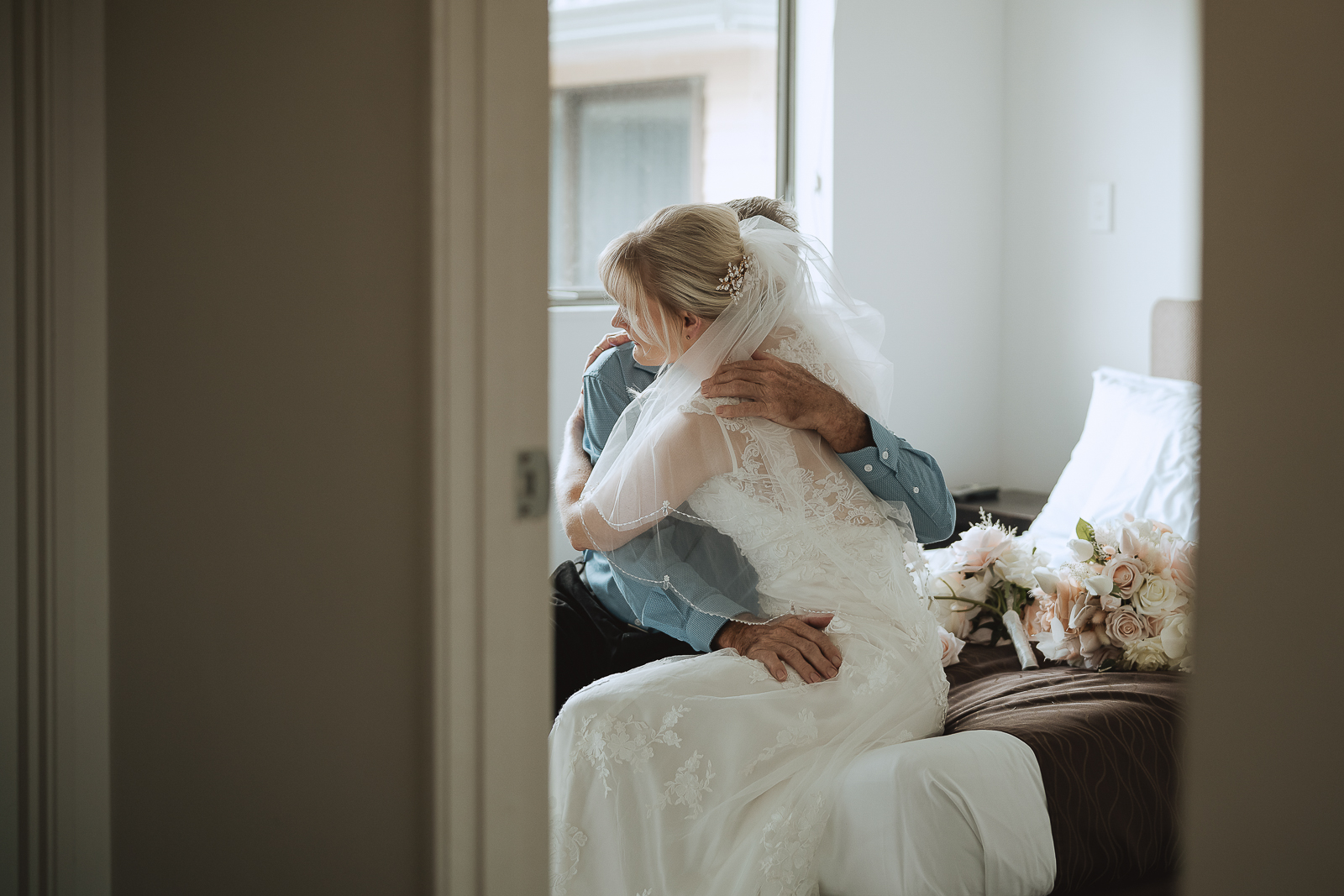
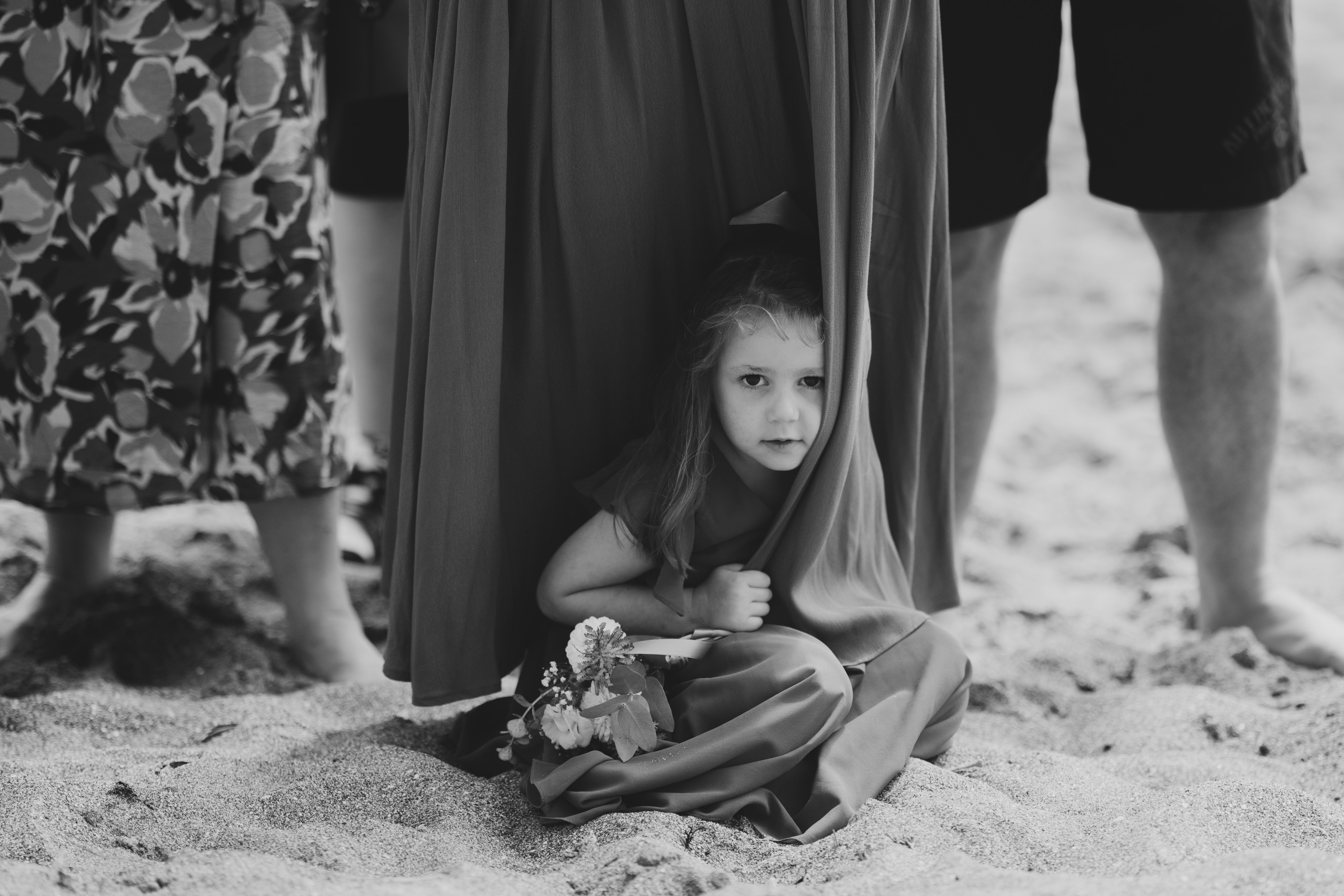
Your wedding day moves fast. Faster than you expect, and honestly? Faster than I expect - and I've been doing this for 26 years. Between the nerves and the love and the laughter and the tears (and the flower girl who's decided she'd rather inspect a beetle than walk down the aisle), entire chapters of your story unfold in seconds - and then they're gone.
No amount of planning can slow them down, and no perfectly staged portrait can recreate them after the fact.
That's exactly why this approach exists - and exactly why it might be the best decision you make about how your wedding day is remembered.
What Is Editorial Documentary Wedding Photography?
Editorial documentary wedding photography, sometimes called editorial wedding photography, is the practice of capturing your wedding day as it actually happens, without a lot of perfectly crafted and overly posed shots that follow a shot list formula. There's absolutely a place for posing (I promise I won't just lurk in corners the whole day), and when it's time for portraits, I know how to make everyone look wonderful. But the real magic? It lives in the seconds between everything else.
It's rooted in the same philosophy as photojournalism: be present, be invisible, and let real life do its thing in front of the lens. A photographer working this way isn't directing the scene - they're reading it. Watching for the emotion before it peaks. Noticing the quiet details everyone else walks straight past. Feeling where the next real moment is about to happen and being in position before it does.
The result is a wedding gallery that doesn't just show what your day looked like - it shows what it felt like.
The Difference Between Editorial Documentary and Traditional Wedding Photography
Traditional wedding photography is built around control. The photographer gathers people, positions them, directs their expressions, and creates beautiful polished photographs where everything in the frame was intentionally placed there. Clean, lovely, everyone's eyes open. Brilliant.
But here's the truth: the photographs that make you cry twenty years from now won't be the ones where everyone was looking at the camera.
They'll be the ones no one knew were being taken.
The glance your mother gave you when she thought you weren't looking. The moment your partner's composure completely dissolved as you walked down the aisle. Your grandmother's hands holding yours during the ceremony. Your best friend laughing so hard they couldn't breathe on the dance floor (and possibly snorting - which I will absolutely photograph). These are the images that transport you back - not just to the visual, but to the feeling.
This approach is designed to catch those moments. It requires a completely different set of skills from traditional photography - because the photographer isn't creating the moment. They're hunting it.
The Art of Anticipation: Seeing What Others Don't
Here's what separates a great documentary wedding photographer from a good one: anticipation.
Anyone with a camera can photograph a moment after it happens. A skilled documentary photographer captures it as it's happening - sometimes before the people in it are even fully aware of what's unfolding.
This is genuinely the thing I love most about my work. I am a world-class people watcher (honestly, if I weren't a photographer I'd be the slightly intense woman in a cafe with a notebook). I've spent 26 years studying people - the way they move, the way they look at the people they love, the micro-expressions that flash across someone's face a full second before the visible emotion arrives. Over time, it becomes almost instinctive. You learn to read a room the way a musician reads a score - feeling the rhythm, sensing where the crescendo is building, knowing intuitively when something real is about to happen.
On a wedding day, this might look like noticing a flower girl getting distracted by something in the distance just before she does something completely unexpected (the beetle, remember). Or sensing the tension and tenderness of a father who hasn't yet seen his daughter in her dress - and being in position before the doors open. Or catching the exact moment during the speeches when the groom stops laughing and looks at his bride with an expression that says everything words can't.
These moments don't announce themselves. You have to feel them coming.
Energy Sensitivity: The Invisible Language of a Wedding Day
Every wedding has an energy - a unique emotional atmosphere that shifts and flows throughout the day. Some parts feel charged with nervous anticipation. Others carry a quiet, almost sacred stillness. Others erupt into pure, chaotic joy (usually around the time the DJ plays something from the 90s).
A photographer working this way needs to be sensitive to all of it - not just intellectually, but intuitively. Moving through a room without disrupting it. Being present without being a presence. Feeling the shift in the air that signals something meaningful is about to happen.
This is one of the things that genuinely lights me up about wedding photography. Every wedding is a completely different story with its own emotional vocabulary. Part of my job is learning that vocabulary quickly - sometimes within minutes of arriving - so I can read the room and respond to it in real time.
The couples who are most surprised by their galleries are usually the ones who had no idea how much was happening around them while they were busy, you know, getting married. When you're in the middle of it, you miss so much. That's not a flaw - it's just the beautiful reality of being fully present in the biggest day of your life. My job is to see what you're too wonderfully immersed to notice.
The Moments Between the Action
There's a concept in film editing called the cut between the cuts - the moment between the visible action that reveals what the scene is actually about. This approach works exactly the same way.
The "action" of a wedding is obvious: the ceremony, the first dance, the cake cutting. But the photographs that define a wedding gallery usually happen in the gaps - the in-between moments that exist alongside the scheduled events but don't belong to them.
The bride sitting quietly in the corner of the room, five minutes before walking down the aisle, lost completely in her own thoughts. The group of groomsmen sharing a moment of nervous laughter backstage (and possibly panicking about a missing tie). The grandparent watching the first dance from across the room with an expression that holds a lifetime of meaning. The children who've fallen asleep under a table while the adults dance on.
These are the photographs that make people say: I forgot that happened. I'm so glad you caught it.
Finding these moments requires stillness - the ability to step back from the choreography of the day and simply watch, without agenda, without a shot list, without needing to manufacture anything. Just waiting for life to offer up what it's already doing anyway.
Why Editorial Documentary Photography Is More Important Than Ever
We live in an age of heavy curation. Social media has trained us to present only our most polished selves - filter everything, stage everything, caption everything before releasing it into the world. Wedding photography has sometimes followed suit, producing beautiful but oddly lifeless galleries full of perfect smiles and perfect poses that somehow feel less alive than the day itself.
There's a growing hunger for something more real. More honest. More human.
Editorial documentary wedding photography is exactly that. It trusts that your wedding day - your real, unfiltered, imperfect, joyful, emotional, complicated, magnificent wedding day - is worth capturing exactly as it is. That the laugh lines and the tear-streaked faces and the messy dances and the quiet glances aren't flaws to be hidden, but stories to be kept.
Twenty years from now, you won't wish your photos were more polished. You'll wish you could remember exactly how it felt.
What to Look for in an Editorial Documentary Wedding Photographer
If you're considering hiring an editorial documentary photographer, here's what to look for beyond the pretty portfolio:
Experience and observation skills. Look for a photographer who has spent years developing the ability to read people and anticipate moments - not just someone who occasionally shoots in a candid style when they feel like it.
A hands-off approach. Ask how they work on the day. A true editorial documentary photographer will describe blending in, observing, and responding - not corralling your guests or orchestrating moments like a school photo day.
Emotional intelligence. The best editorial documentary photographers are genuinely empathetic. They understand human emotion deeply, and that understanding shows up in every photograph.
Authentic testimonials. Read what previous couples say - especially what they say about the photographs they weren't expecting. Those are the ones that matter most.
Frequently Asked Questions About Editorial Documentary Wedding Photography
What is the difference between editorial documentary and candid wedding photography? Candid photography refers broadly to unposed, natural moments. Editorial documentary photography goes deeper - it's a sustained approach to the entire day, treating the wedding as a story to be told from beginning to end, with a real commitment to authenticity. Candid is a vibe. This approach is a philosophy.
Will an editorial documentary wedding photographer also take formal portraits? Yes - absolutely. Most editorial documentary photographers (including me) include a dedicated creative portrait session as part of coverage. Think of it as the best of both worlds: editorial documentary storytelling for most of the day, beautiful intentional portraits when the light is good and you've had a glass of champagne.
Is editorial documentary wedding photography suitable for all wedding styles? Completely. Whether your wedding is an intimate elopement in the New Zealand wilderness or a grand multi-day celebration with 200 of your closest friends, this approach captures the true emotion of whatever actually unfolds.
How do I prepare for an editorial documentary wedding photographer? Here's the beautiful part - you don't really have to. The whole point is that I'm doing the work, not you. Be present, enjoy your day, and try not to keep asking if I got the shot. (I got the shot. And twelve others you didn't know were happening.)
Why should I choose an editorial documentary photographer over a traditional one? If you want photographs that make you feel something - that take you straight back to the emotion of your wedding day, not just a visual record of it - this approach is the answer. The moments that make these galleries extraordinary are the ones no posed portrait could ever replicate.
Closing Thoughts
Your wedding day is the accumulation of a lifetime of love - and it passes in a single, beautiful, chaotic, wonderful afternoon. This approach is the practice of honouring that day by seeing it clearly, completely, and honestly.
It takes more than a camera and a fast lens. It takes years of watching people. A deep sensitivity to human emotion. The patience to wait for something real. The instinct to know when it's coming before it arrives. And honestly? A genuine love of people that never gets old.
That's the work I'm most passionate about - and why I believe every couple deserves a photographer who treats their wedding day not as an event to document, but as a story worth telling well.
And here's the thing - great documentary photography doesn't mean giving up beautiful, cinematic portraits. It means you get both. If you'd like to understand how those two approaches work together (and why they're better together than apart), read on: Editorial Documentary with a Cinematic Touch: The Best of Both Photography Worlds →
Rachel Jordan is a 5x Master of Photography, Sony Alpha Wedding Photographer of the Year 2025, and founder of Two Little Starfish, award-winning wedding photographers offering editorial documentary with a cinematic touch, based in Kerikeri, Bay of Islands, Northland, New Zealand. Rachel photographs weddings throughout New Zealand and internationally.
View the Wedding Portfolio → | Bay of Islands Wedding Photography → | Russell Wedding Photography → | Paihia Wedding Photography → | Kerikeri Wedding Photography → | Northland Wedding Photography → | Get in Touch →